Short answer: We audited seven safari operators and hotels in Tanzania, Kenya, Uganda and South Africa between 14 September and 14 October 2026. Five of the seven rank first on Google for their own name. Five of the seven reach page one for none of the trips or rooms they actually sell. The average overall GEO score was 45 out of 100. Four publish an llms.txt file for AI assistants, and not one of the four describes the business properly. Where we sampled AI answers directly, no operator was named unless the question already contained its name. The anonymised dataset is published below.
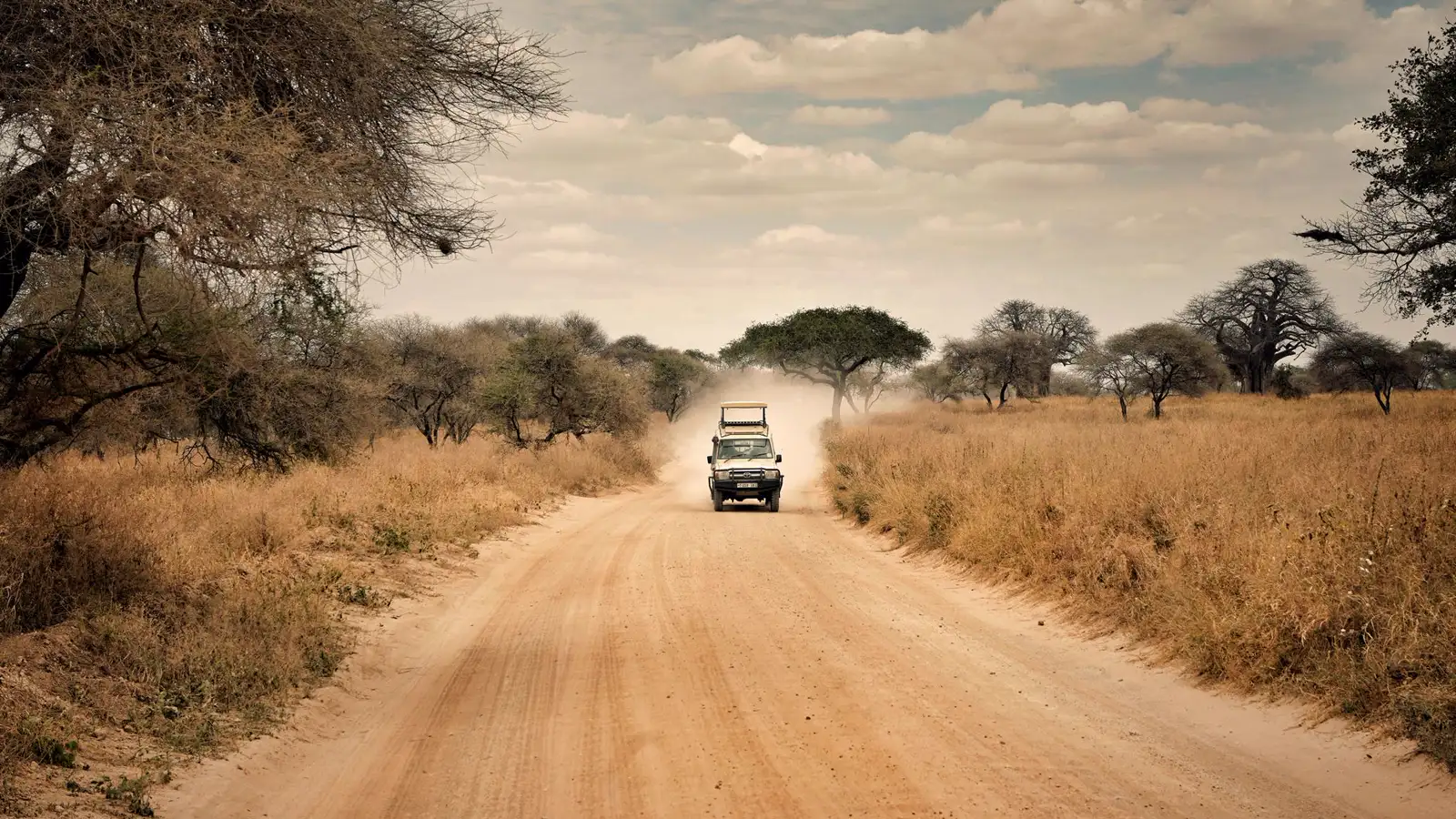
A reservations manager in Arusha opens the laptop in the morning and searches for the company. There it is, position one, with the logo, the reviews and the map pin. Reassuring. The website works.
Then a traveller in Hamburg, who has never heard of the company, asks an assistant for a five-day Serengeti safari with a good local operator. The traveller gets three names and a booking platform. The company is not one of the three.
Both searches happened on the same morning. Only one of them was ever going to bring new business.
Illustrative composite — not a client, not a testimonial
Who we audited
The index covers seven hospitality businesses in four countries: three operators in northern Tanzania (two in Arusha, one in Moshi), two in Nairobi, one historic hotel in Kampala and one four-star hotel in Cape Town. Each was audited individually, on its own live website, between 14 September and 14 October 2026.
Every business received its own scored report. We have anonymised them here, because a report written for an owner is not the same thing as a league table written for the public, and nobody agreed to be in a league table. The figures are exact. The names are left out.
This is the hospitality counterpart to the Baromètre we ran on 30 Cameroonian organisations, and a closer look at the pattern our five-city search study found from the outside: in hotel and safari searches, the business itself is rarely the page that gets shown.
Found by name, missing by need
Five of the seven businesses rank first on Google for their own name, and five of the seven have no commercial search on page one at all. Those are mostly the same businesses. Being found by people who already know you is close to universal. Being found by people who need what you sell is the exception.
The details are worth a moment. One Arusha operator sells a five-day Serengeti trip with a published price and a six-day Machame climb with a published price. It reached the top 30 for neither. On two of its seven searches a Reddit thread was among the winners, which is a humbling thing to lose to when you own the vehicles.
The other Arusha operator had one commercial result we could find at all. It was in position 44, on page five, where the only regular visitors are SEO consultants taking screenshots.
The two businesses that fell outside the pattern are instructive in opposite directions. A Nairobi operator ranked second for its own name, behind a booking directory’s profile of that same operator. And a second Nairobi operator had no result of its own of any kind, because the web address printed on its trade-association listing is not registered. Every traveller who clicks through to check the company is real lands on an error page.
Only the two hotels reached page one for anything beyond their names: the Kampala hotel once, in position eight, and the Cape Town hotel twice. On most of the remaining hotel searches the winning pages were booking platforms selling those same hotels’ rooms. The commission on those bookings is the price of not owning the result.
Reviews did not buy visibility
The strongest reputation in the sample produced the same commercial visibility as the weakest: none. The Moshi operator has more than 2,500 TripAdvisor reviews at 4.9, sits in the national operators’ association, and scored 74 out of 100 for off-page authority, the highest single pillar score in the index. Websites it owns appeared on page one for none of the eight commercial searches we checked.
The same operator owns hotels and camps. None of them has a page on its main website, and none appeared in any hotel or lodge answer we sampled. Owning the beds and renting the visibility is an expensive way round.
When we asked assistants directly, that operator was named in 2 of 9 answers. Both were the question that asked about it by name. For the questions a new customer would ask — best Kilimanjaro operator, what a climb costs — the assistants named other companies. A second operator was named in 0 of 2 buyer questions, and a third was cited by neither ChatGPT nor Perplexity.
The point is not that reviews are worthless. They close the sale once somebody has found you. They simply live on someone else’s domain, and the page that gets quoted is the page that holds the facts. Our guide to getting a safari company recommended by AI covers how to bring those facts home.
The llms.txt finding
Four of the seven businesses publish an llms.txt file, and none of the four uses it to say who they are. That is a more interesting result than the one we found in Cameroon, where none of 26 working sites had the file at all. In East African tourism the file has arrived. It arrived by plugin.
- One is the default output of an SEO plugin: 34 words and a single link, to the sitemap.
- One is a 44 KB automatic export that describes a Nairobi tour company, in full, as “African Safaris”.
- One is served correctly, but the pages it lists were refused to AI crawlers. The assistant is handed a table of contents and then turned away at the door.
- One belongs to a hotel group and does not name the hotel we audited.
An llms.txt is a plain-text introduction: who you are, where you operate, what you sell, what it costs, how to book. Written by hand it takes an afternoon. Generated by a plugin it takes no time and says nothing, which is a fair trade as far as it goes. We should add the usual caution: no assistant has promised to read the file, and it has never been shown to move a Google ranking. It is cheap, it is sensible, and four out of four businesses got it wrong.
All seven, side by side
| Business | Overall GEO | Own name | Commercial searches on page one | llms.txt |
|---|---|---|---|---|
| Safari operator, Arusha (A) | 73 | #1 | 0 of 7 | Plugin default, 34 words |
| Safari operator, Arusha (B) | 60 | #1 | 0 of 5 (best: #44) | None |
| Kilimanjaro and safari operator, Moshi | 53 | #1 | 0 of 8 | Published, pages blocked to AI crawlers |
| Tour operator, Nairobi | 41 | #2, behind a directory | 0 of 2 | 44 KB automatic export |
| Four-star hotel, Cape Town | 41 | #1 | 2 of 5 (best: #3) | Group file, hotel not named |
| City-centre hotel, Kampala | 39 | #1 | 1 of 6 (#8) | None |
| Safari operator, Nairobi (no working website) | 9 | Directories only | 0 of 3 | No website |
Across the seven, the mean overall GEO score was 45 out of 100 and the median 41. By pillar, the averages were 39 for Technical SEO, 38 for On-Page, 45 for Off-Page and 39 for GEO and AI readiness. Off-page is the strongest pillar, which fits everything above: these businesses are better known than they are findable.
Note the top row. A score of 73 means the site is easy for an AI crawler to read. It does not mean anybody has given the crawler a reason to choose it. Readable and recommended are two different jobs, and most of the industry is still selling the first one as if it were the second.
What an operator should do first
Publish your prices and itineraries on your own domain before doing anything else. In one Nairobi search we checked, all ten competing results showed a price. The operator we audited showed none, for a tour featured on its own homepage. An assistant asked what a half-day park tour costs can only quote the pages that say.
- Make sure the address you advertise works. Check the link on your association listing, your directory profiles and your email signature. One business in seven failed this.
- State the facts in the page and in structured data: business type, address, phone, price range, ratings. The Kampala hotel’s structured data described it as an organisation with a logo and three social links, and nothing else. See how to get a hotel cited by ChatGPT.
- Give every product its own page, including the lodges and camps you own. A property with no page cannot be the answer to a question about where to stay.
- Write the
llms.txtby hand, and check your server is not refusing AI crawlers the pages it lists. - Then test it the way a stranger would: ask the assistants for what you sell, without your name in the question. Our free AI-visibility check runs that test for you.
That list is the core of the work we do for safari operators and for lodges and hotels, and none of the seven businesses needed a new website to do it. Operators in Kenya can start from the Nairobi page.
When this is not your problem
If nearly all your bookings come through agents, repeat guests and overseas tour brands, AI visibility is not your first problem and you should not pay anybody to fix it yet. A ground handler who sells only to the trade has no need to be named to the traveller in Hamburg. The agent already knows where to find you.
The same goes for a business with no capacity to take more direct enquiries. Visibility sends strangers to your inbox. If nobody answers within a day, you have paid to disappoint people faster.
It becomes your problem when you want direct bookings, when you are paying commission on guests who would have found you anyway, or when the answer a traveller receives names three of your competitors and you would like to be the fourth.
Method and limits
Each business was audited individually on its live website, and the scores describe the audit date only. Technical and On-Page scores were calculated check by check from served HTML, response headers, robots.txt, sitemaps and structured data. Off-Page is an estimate from public listings, without a backlink database.
Rankings come from live Google searches for each business’s name and for the commercial phrases that describe what it sells. Search depth varied by audit, from the top 10 to the top 50, so “page one” here means the top ten organic results. Results vary by location and by day.
AI answers were sampled directly for three of the seven businesses, all in Tanzania. For the other four, AI readiness was judged from the files the site publishes. We have kept those two kinds of evidence apart in the text above, and you should too.
Seven businesses is a pilot. They were not chosen at random, and four countries do not make a continent, whatever our title is implying. The anonymised dataset is here: Africa Safari & Hotel AI Visibility Index, pilot edition (JSON). The next edition will use one fixed set of traveller questions, put to the same assistants for every business, so the results can be compared directly from one quarter to the next.